| Home |
| Early Life |
| Maps |
| Oregon
Laws |
| The
Trail |
| Bush
Biography |
| Tumwater
Born |
| Thurston
County |
| State
History |
| Bush
Farm Today |
| FAQs |
| Timeline |
|
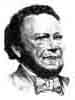
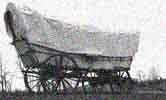
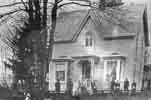
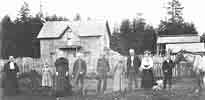
Mulatto Pioneer Founder of Bush Prairie Troubled by Racial Prejudice Tacoma News Tribune – January 31, 1954 – Alfred Apsler Where Tacoma and Seattle and many other thriving Puget Sound communities are, was once political no-man’s land. One of the pioneers that helped make it America was a warm-hearted brown-skinned man of the name George Bush. His experiences show that the early settlers of the Northwest were not free from racial prejudice though they could ill-afford such luxury. “Your skin is black. I don’t want your help.” That sounded kind of silly when hostile arrows were whishing overhead on the Oregon Trail and the wagon wheels got stuck in sand and mud. Yet brave and forthright as they were, when the west bound immigrants crossed the Rockies, their old biases and superiority notions came right along with them. The Negro problem is one of America’s major social headaches. It did not take long to transplant it in the new territory. Crammed into the covered wagons were many families from slave states. On the political firmament, the clouds of civil strife were gathering. No question brought temperatures up to such a feverish pitch as did the one on the Negro’s status. Pennsylvania-born George Bush was not the first colored man to appear this side of the continental divide. The Lewis and Clark expedition made itself popular with the natives because of the number one exhibit: York, the dusky handyman, diplomat and clown. Liked by Indians Other members of the race joined the French-Canadian “voyageurs” in their fur trapping and trading ventures. It seems that the captains of the far-flung pelt business liked to have some Negroes around. They had a reputation of getting along better with the Indians. Perhaps the redskin sensed a community of fate with those ex-Africans. Both knew the white man’s whip. On several new homesteads could be found slaves which their masters had taken with them, thereby transplanting the system of bondage over 3,000 miles of emptiness. George Bush had white as well as black ancestors, but that did not free him from his racial handicaps. By the time he reached the Columbia River in 1844 he was already through with his first career. After years of working for fur companies, he retired from the campfires of the buckskin crowd to a prosaic cattle trading business in Missouri. Bush was fairly prosperous but the color line caught up with him. Free Negroes were excluded from the state. So his eyes turned again to the west where he had known a life unhampered by man-made restrictions. Lots of talk went around in those days about the new Oregon country. The restless and the thwarted were casting about to be off for the Pacific. Served as Guide With his German-American wife and five sons, Bush joined Michael T. Simmons, a Kentucky colonel, and some others to form a large wagon train. His woodsman’s know-how made him an ideal guide on the tedious journey. But if the Bushes hoped that out here they could just forget that there was such a thing as a race question, they soon found out different. Even the few isolated pioneer settlements were not willing to discard the old color scheme. The Dalles looked like a good place to stay, but all the newcomers encountered were icy stares, plainly meaning “you are not wanted.” The odyssey of if the Bush family was not yet over. The next step was Fort Vancouver where the small band ran smack into a ticklish international controversy. It was the tug-of-war between England and America over the then jointly occupied Northwest. Dr, McLoughlin, chief factor of the Hudson’s Bay Company and undisputed czar of the whole area, had strict orders to give American settlers the cold treatment. If they could not be frightened away, at least he should shoo them all into the Willamette Valley. The company had already crossed off the valley to the south as too much infested with Yankee squatters. Bush would not have minded making out a claim on the loamy bank of the Willamette. But again the race bars were lowered in his face. The recently founded Oregon government said no to any kind of Negro immigration whether slave or free. It was written into the territorial constitution and remained there till after the Civil War. An astounding number of Oregonians loudly upheld the southern point of view. The Bushes were in no mood to turn back. The doors were closed behind them. Only one course was left: moving on to even remoter regions. Moved Northward Well wishers whispered “If you keep north of the Columbia, nobody will bother you. Sure, officially you’ll still be in Oregon territory, but the sheriff is not required to cross the river. He will stay on his side, if you stay on yours.” So the teams were hitched up again. The leader waved the caravan on toward the north. Now they were taking a terrific chance. Any moment the grumbling British lion could let out a big howl: that was really stepping on his sensitive toes. No American had yet invaded the northern part of the territory to make himself at home permanently. The party of about 30 inched forward along what is today Highway 99. At the Cowlitz River, the dense forest halted the wagons: so they continued on foot and with pack animals. Puget Sound was their next and this time their final definition. From all contemporary appraisals emerges the picture of George Bush as a fine fellow, if there ever was one. The trail companions and later the neighbors mention again and again his helpfulness and his generosity. While at Fort Vancouver he made friends with the Canadian personnel, probably swapping yarns with them about the old trapping days. His whole group profited immensely from the resulting amiable relationship. The Hudson’s Bay people were actually defying orders when they slipped food and supplies to the shivering newcomers. These poor travelers were closer to their hearts than their own London stockholders. Without their help Bush could hardly have managed to smuggle his party up to the Sound. Became Farmer “Bush Prairie” can still be found near what is today Olympia. There Bush staked out a 640-acre donation claim and soon earned the settlers’ admiration as a crack farmer. With the help of fruit and shade tree seeds brought along on the Oregon Trail, he made Bush Prairie the show piece of the area. His son William Owen must have had a particularly green thumb. His planting and breeding projects won him medals of distinction at the international fairs in Philadelphia, Chicago and Buffalo. In addition to their chores, the Bushes ran what amounted to a roadside hotel, all for free. Wayfarers on route between Cowlitz Landing and Puget Sound points liked to stop there; the house was always wide open for everybody. With a good square meal in their stomachs and gifts of grain and fruit from the Bush stores in their bags, they pushed on feeling comfortable and grateful. A fellow-pioneer recalls this example for Bush’s much-hearlded neighborliness. Once some Seattle speculators drove the prices of grain sky high. On Bush Prairie the bins were full, but for many of the others it had been a bad year. The brokers were pestering George to sell for a good-size hunk of profit. He wouldn’t do it. “I’ll just keep my grain,” he said, “to let my neighbors who have had failures have enough to live on, and for seeding their fields in spring. They have no money to pay your fancy prices, and I don’t intend to see them want for anything I can provide them with.” Friendly Family The whole family demonstrated an enviable capacity to make friends. They were even on good terms with such adversaries as the British and the Indians. The resident Hudson’s Bay agent at adjacent Fort Nisqually, Dr. Tolmie, more so than even Dr. McLoughlin, was duty-bound to make it tough for the Americans. But before long he and Mrs. Bush were great pals who liked to exchange gardening hints. The Indians got quite nasty at times, backed as they were against the shores of the Pacific with no further route of retreat from the advancing land-grabbing palefaces. But never was there any trouble on Bush Prairie. Once two tribes fought each other all day right on the family property. Before they got into the fray, both sides pledged themselves not to touch any of the whites living there. And they kept their promise. The neighbors made no bones how they felt on the subject of the Bushes. George was legally still an undesirable individual and not empowered to hold property. Upon a petition of his friends, the Washington legislature passed a special bill in 1855, confirming his title to the prospering farm. The sons inherited the father’s disposition and also the esteem of the community. William Owen was state representative from Thurston County, and George Jr. held the presidency of the Washington Industrial Association. The example of George Bush did not convert all Northwesterns to an attitude of fairness towards minority groups. But it has furnished support to those who are upholding the basic right of the individual to be judged on his own merits. |